|
||||||||||||
| 10 Reasons Big Question Rider Profiles Owner's Manual HOME |
Why the DC Model? DC Model Videos |
Images Video Events |
Links Velo News The Other Brands Mike's Rants |
|||||||||
Press
One-Off in the Media
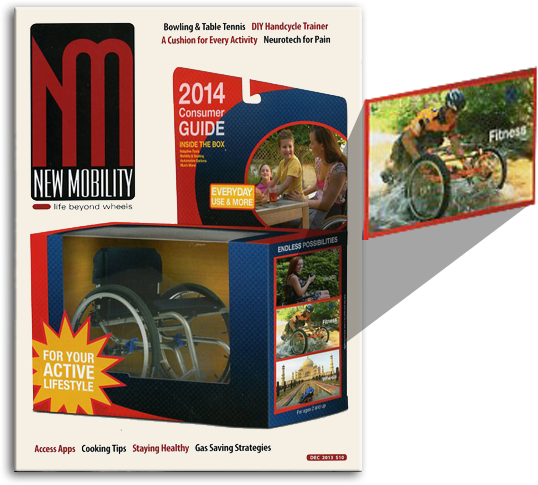
| A One-Off Handcycle was recently spotted on the cover of New Mobility Magazine! Jan 2014
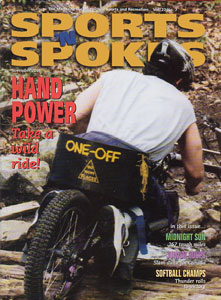
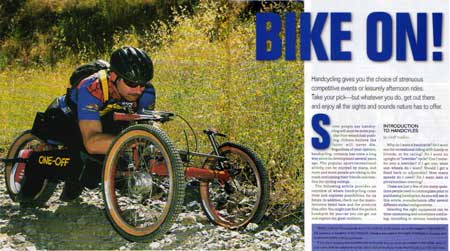
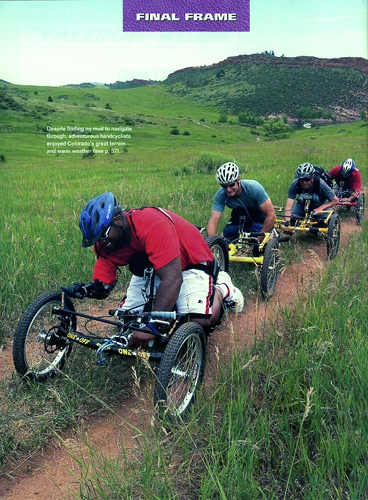
Muddy Mahem Coverage! Muddy Mayhem dubbed Dusty Mayhem this year. Sports 'N Spokes takes on the 2009 Adventure TEAM Challenge. 2009 The Adventure TEAM Challenge - Article on the inclusive adventure race from worldteamsports.org With the internet and our connections in the bicycle industry, we've gotten a good deal of press. The most valuable is that written by an objective journalist who is also an expert handcyclist. We have Bob Vogel, New Mobility Magazine, and Sourcehealth.com to thank for those articles. What we really want, and what handcycling needs, is a comparison test with all the different brands of handcycles side by side. Car, motorcycle, bicycle and trade magazines of all sorts do "comparison tests" every month. Their readers become more informed consumers, and their sport/industry evolves more quickly. There is no substitute for reading the opinions of experts. Motorcyclists call them "moto journalists". Those of us in the wheelchair industry do without. Coming from the bicycle industry, where I grew to rely on the magazines, it's hard for me not to complain. Thankfully, there is the internet. We have an amazing new way of informing our potential customers: we ask them to do a search. Go to your favorite search engine and type in "all terrain handcycle" or maybe, "handcycle rough climbing". Sports n' Spokes Magazine Cover
MIT Inventor of the Week October 2001 "[Mike] Augspurger came up with the innovative design that many of the world-class wheelchair racers in the world use today. In this design, the cycle allows the rider's legs to be folded back and strapped into supports. The rider's upper body can then lean forward, with arms extended down to reach the hand cranks and the chest resting on a pad. There are handlebars in front that can be used for steering when the cycle is going downhill; on uphill or flat terrain, arms must be used for cranking. Additionally, the sternum pad, which pivots and is connected by cables to the steering mechanism, can be turned left or right by moving the chest. Brakes and gearshifts are located on the handlebars. The near-prone position of the rider allows body weight to be used more effectively, and hand cranks, which are connected to the gears and chain, are mounted so that when the rider pushes down with one arm, the other can pull up, maximizing the rider's muscle power. Also, handlebar and sternum steering solves the dilemma of cranking versus steering." |
Dirty Teeth – Mountain Bike Hand Cycling Mammoth Mountain from Anonymous Freebird on Vimeo
|
 SPORTS 'N SPOKES